When money gets tight, every monthly bill comes under scrutiny. Streaming subscriptions get trimmed, gym memberships get questioned, and eventually, someone looks at the monthly pool service charge and wonders whether it’s worth keeping. It’s a fair question. In Temecula, where summer temperatures regularly exceed 100 degrees and pools see heavy use for much of the year, the answer isn’t as simple as “cancel it and save some money.”
Canceling your Temecula pool service can feel like an immediate win. But the true cost of dropping service depends on what happens next. If you can maintain your pool properly yourself, you’ll save money. If you can’t, those savings can disappear quickly—and you could end up spending even more than you would have on regular maintenance.
What Can Go Wrong When Maintenance Slips?
Pools are unforgiving when neglected, and Temecula’s climate can accelerate problems. Intense sunlight burns off chlorine quickly. Hard water, which is common in Temecula, can lead to scale buildup on tile, heaters, and salt cells. Wind carries dust, leaves, and other debris into the water, while warm temperatures can allow algae blooms to develop in a matter of days.
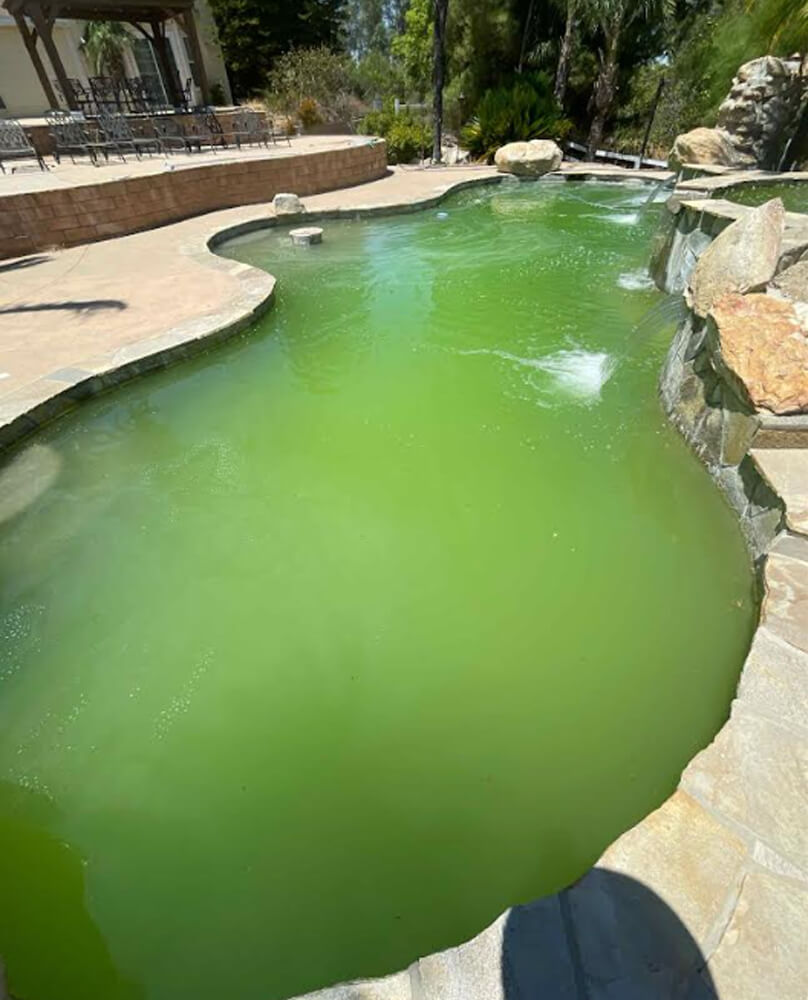
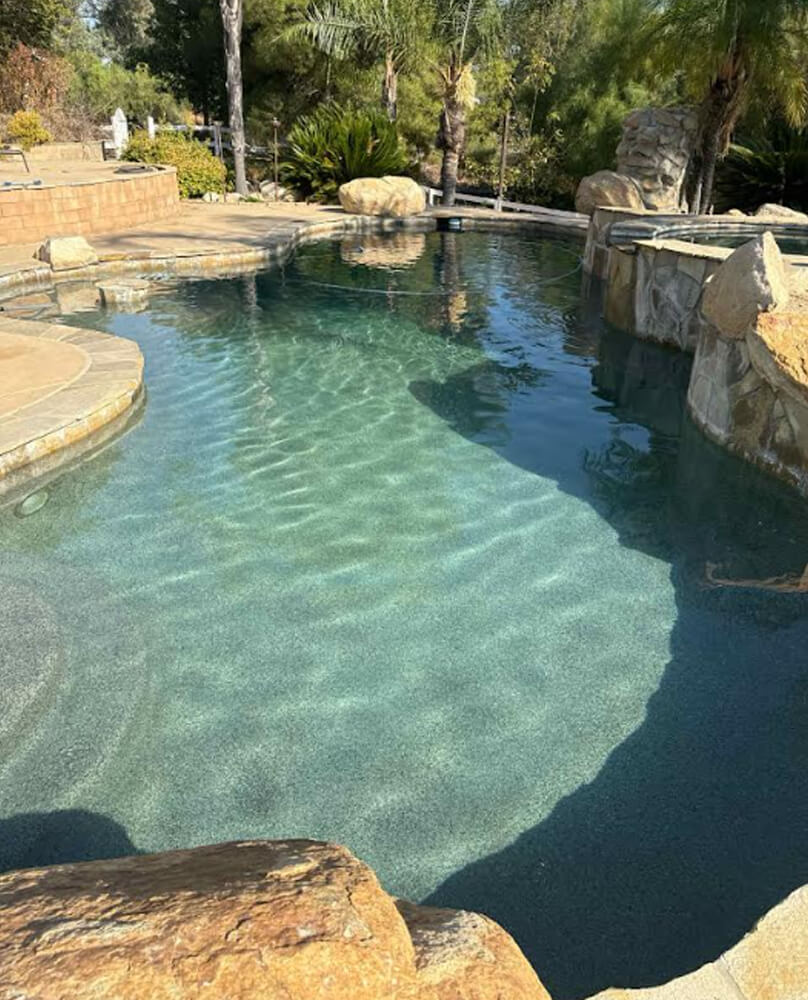
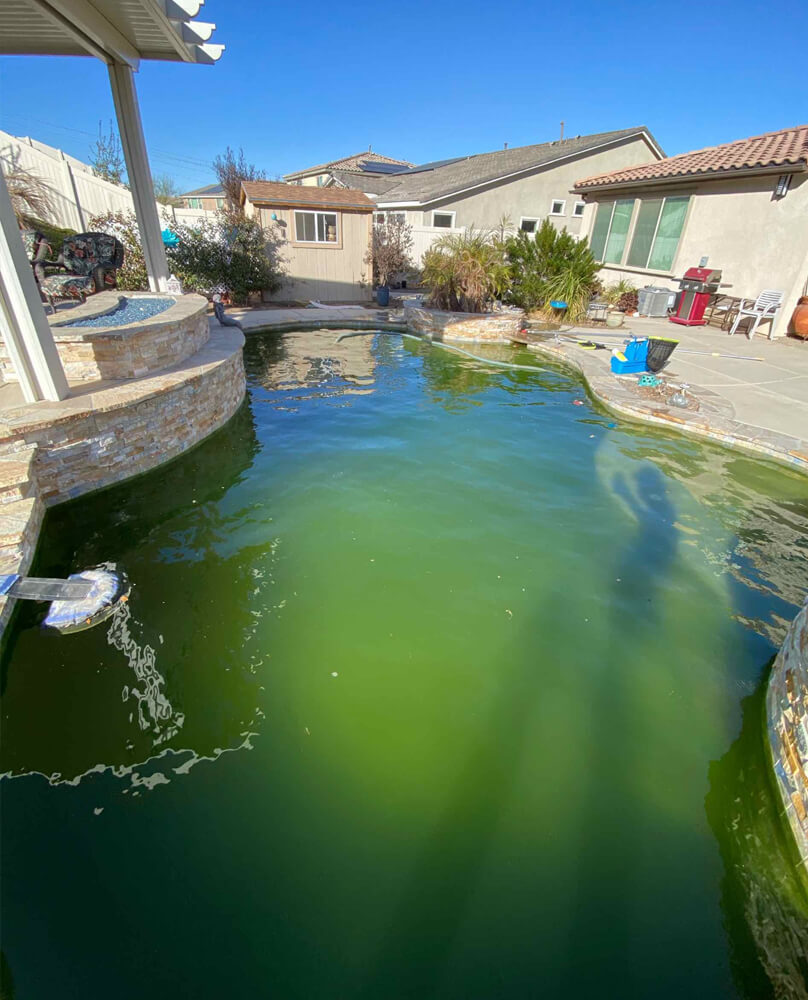
A green pool is the classic worst-case scenario. Getting rid of algae may require a shock treatment, extended filter run times, intensive brushing, and sometimes even a partial drain and acid wash. Professional pool recovery services can cost several hundred dollars or more, potentially wiping out months of savings in a single visit.
Equipment damage is another risk. Pumps, filters, and heaters may have to work harder when water conditions are poor. Unbalanced water chemistry can corrode metal components and etch plaster, leading to repairs that cost thousands of dollars. Long-term neglect can even force you to replaster your entire pool sooner than necessary!
Going the DIY Route
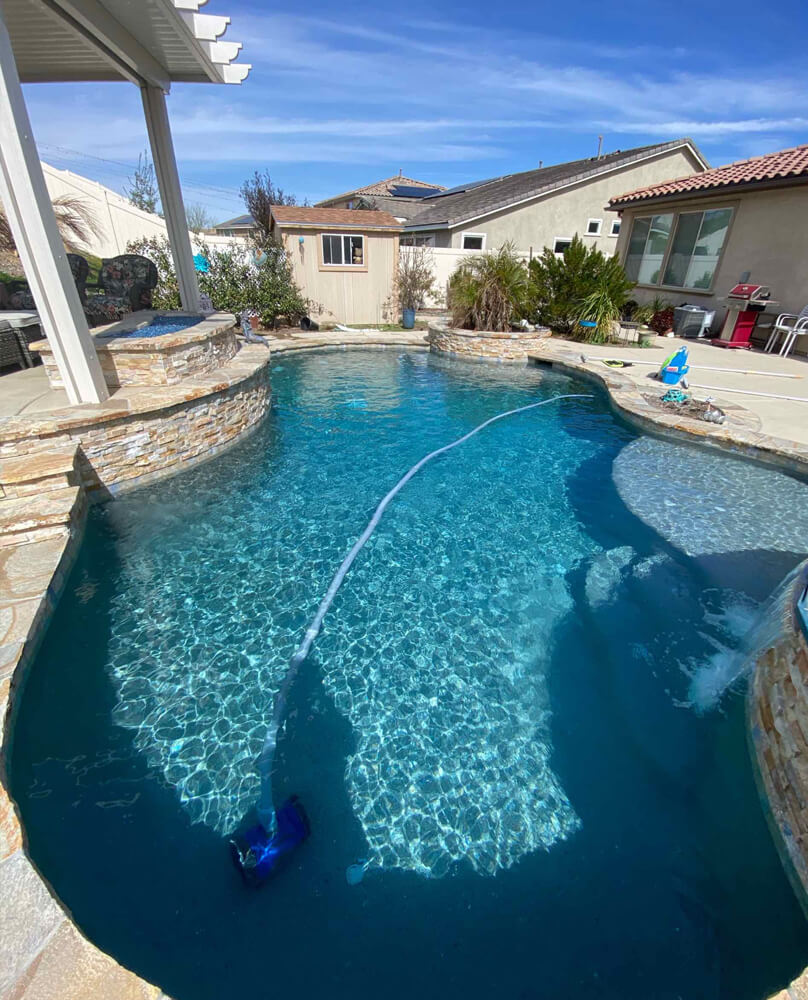
If you’re comfortable with a little routine work, maintaining your pool yourself can be a legitimate way to cut costs. The basics include skimming and brushing the pool weekly, emptying the skimmer and pump baskets, testing the water regularly, and balancing chlorine, pH, alkalinity, and stabilizer levels. You’ll also need to backwash or clean the filter as recommended.
Initial costs include a quality test kit, a telescoping pole, a brush, a skimmer net, a manual or automatic vacuum, and chemicals. You can save money by going the DIY route, but pool maintenance also requires an ongoing commitment of time—usually an hour or two per week—and the costs don’t disappear entirely.
Be honest with yourself about your ability to maintain a consistent schedule for your own Temecula pool service needs. DIY pool maintenance works when it’s done regularly. It often fails when it’s done sporadically.
Other Options for Saving Money on Your Pool
Canceling your Temecula pool service entirely isn’t your only option. Consider these alternatives before making a final decision:
Downgrade your service level. At Aqua System, we offer a chemical-only service option that covers water testing and balancing while you handle the skimming and brushing yourself.
Switch to biweekly service. This isn’t ideal during the summer, but it may be sufficient during cooler months, when algae growth slows and debris accumulation decreases.
Lower your operating costs elsewhere. Running your pump during off-peak electricity hours or switching to a variable-speed pump can help reduce expenses without sacrificing professional pool maintenance.
We understand that when money gets tight, families have to make difficult decisions. But canceling your Temecula pool service could end up costing you more in the long run if neglected maintenance leads to algae problems, equipment damage, or expensive repairs. Before you eliminate professional pool care entirely, contact Aqua System to discuss pool service options that fit your budget. From chemical-only service to other maintenance solutions, we can help you find a practical way to protect your pool without putting unnecessary strain on your finances. Don’t let short-term savings turn into long-term expenses!